
Anchurus II is a group of IT applications and manual operations that will enable users to record and interpret excavations.
The current release, Anchurus II release 2, has been designed to support the work of those involved in post-excavation. This objective has been chosen because this is the phase of the archaeological workflow where IT support is most likely to improve our working practices.
Using this manual
This manual consists of a series of web pages which give an overview of the work you need to undertake to record an excavation and carry out the resulting post excavation activities together with details of how to use Anchurus II.
Clicking on the Anchurus User Manual tab followed by selecting Manual Introduction has brought you to this page. However, the menu listing the contents of the manual is quite long, so if you want to see all of the pages you need to click on the menu control tab (the down arrow to the right of the words Anchurus User Manual). When you click on it, the website will present the manual contents list, you can scroll up and down by using the page scroll bar ( see Figure 1.1) and click on the page you want.
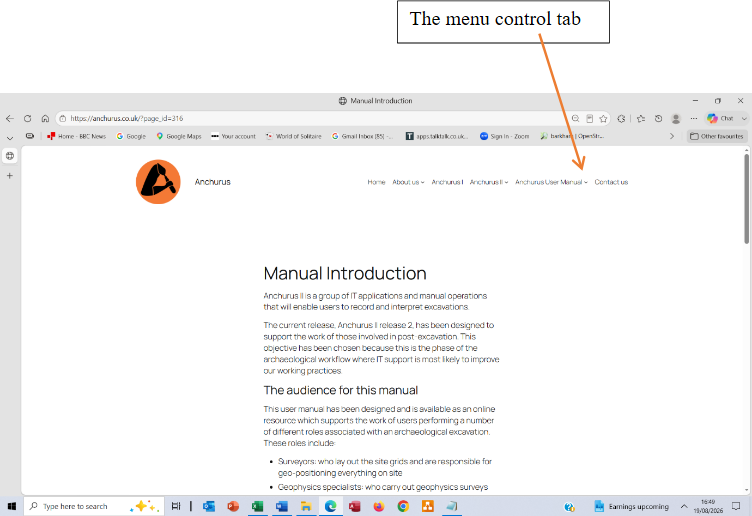
Figure 1.1 The Manual Introduction page and the menu control tab
The audience for this manual
This user manual has been designed and is available as an online resource which supports the work of users performing a number of different roles associated with an archaeological excavation. These roles include:
- Surveyors: who lay out the site grids and are responsible for geo-positioning everything on site
- Geophysics specialists: who carry out geophysics surveys using earth resistance, gradiometer and ground penetrating surveys
- Diggers: who work on site to excavate, recover finds and record contexts. Many diggers are novices learning their way in field archaeology
- Excavation area leaders: who are responsible for ensuring that the archaeological records for their excavation area are as accurate as possible and for the learning environment in which novice diggers learn field archaeology
- Finds specialists: who take responsibility for the finds found on site, register them and include them in a finds’ filing system. They identify the individual finds and then identify the findgroups which represent where, how and when they were produced
- People working in post excavation: who start by reviewing and developing digital records of the context evidence found on site and transform it into the stratigraphic analysis of the site. They then work with the finds specialists to provide a comprehensive understanding of a site, which they can record in site reports aimed at the different audiences who have an interest in the site
- Site leaders: who are responsible for writing Written Schemes of Investigations and overseeing and directing the above
- Information Technology specialists who manage the information systems that support the work of the above
Anchurus II has been developed by a voluntary sector organisation that has groups of members working in all the above roles. For example at an excavation in 2025, the organisation had over 90 people working on site and over 90 people working in post excavation with advice from finds and other specialists.
One implication of this is that Anchurus II supports individuals who:
- Are archaeological novices
- Have median levels of archaeological experience
- Have been working on archaeological sites for a few days a year and for many years
- Are register CIfA members
Andrew Hutt
Version v05
19/08/2026